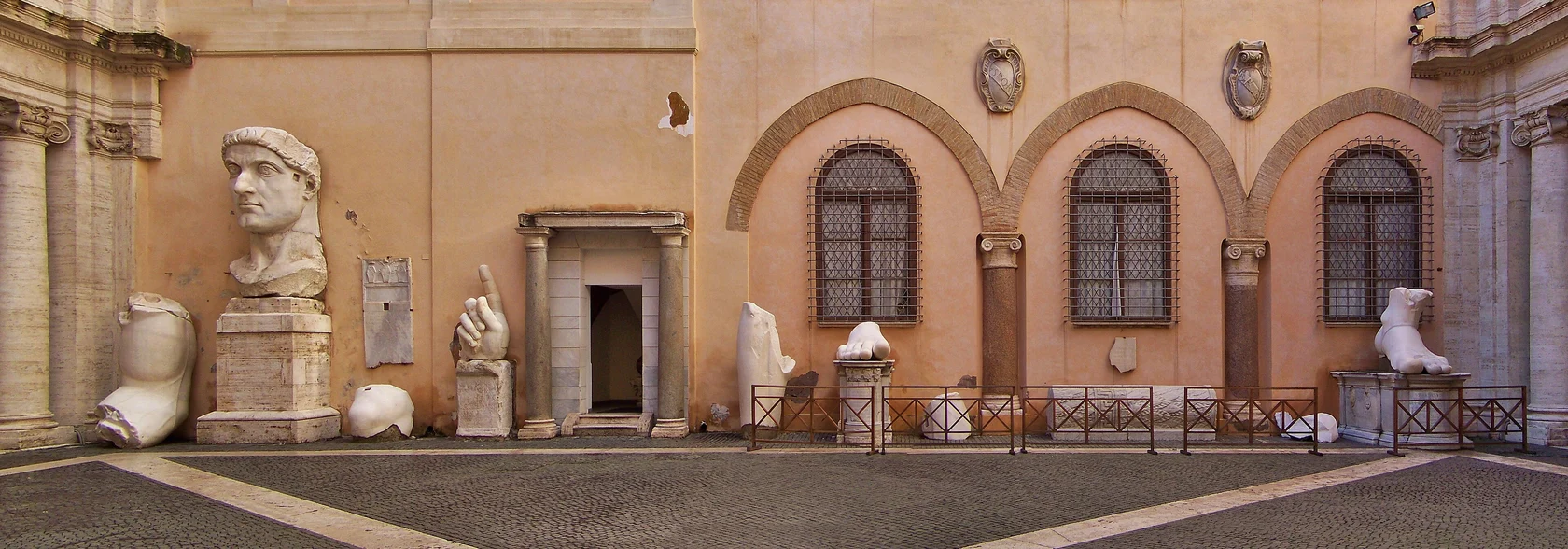
Fragments of the colossal statue of Constantine along a courtyard wall in Rome: a marble head, a hand and other parts

On modularization

Assumed Audience Anyone who sorts their work into boxes, which is most people with a job. The second half gets into repositories and services, so it speaks most to engineers, architects, and whoever signs off on their diagrams. A recurring part of my work is (trying) to talk people out of splitting something up; a second repository, a separate service, sometimes even a whole separate team. The gist is always that the parts get presented/wishful-thinked as separate, yet in reality they’re still coupled, but now there’s a border, with all the overhead that requires. It happens so often that I wanted to do some research to figure out why. Why do humans split things? And why do they split more than is useful for the job at hand? ...

November 16, 2026 · 15 min · Rutger de Knijf
Augustus of Prima Porta, cast of the 1st-century AD marble statue

AI in the software development pipeline

Assumed Audience Engineers probably, tech leads, CTOs, etc. Anyone interested in adding useful AI to their software development. As I was bolting on more and more autonomous AI agents at Energyworx this past year, I kept looking for the next bit of low-hanging fruit. Turns out there’s already a framework that maps where it all is: the SDLC. The Software Development Lifecycle which my OCD thinks should clearly be called “SDL”, but I digress is a pattern to describe how software ideally gets from not existing to “Computo, ergo sum.” ...

June 28, 2026 · 19 min · Rutger de Knijf